How to Identify a Refrigerant Leak in Your Home Cooling System
Phoenix summers punish weak air conditioners. A refrigerant leak turns a reliable system into a warm air machine at the worst time. Homeowners across Phoenix, AZ, from Arcadia to Desert Ridge, can spot early warning signs and act before a small leak becomes a full system failure.
Day & Night Air Conditioning, Heating, & Plumbing supports homeowners and businesses across Maricopa County with fast diagnostics, central air conditioning restoration, and 24/7 emergency AC service. The team handles residential cooling solutions and commercial HVAC repair for busy properties near Chase Field, Phoenix Sky Harbor International Airport, and the Biltmore area. This article explains what a refrigerant leak looks like, why it happens, what damage it creates, and how a trained HVAC contractor confirms and fixes it under Phoenix heat.
Why refrigerant matters in Phoenix living conditions
In the Valley of the Sun, the coil inside the air handler must stay cold to pull heat and moisture from indoor air. Refrigerant, often R-410A in Phoenix homes, absorbs that heat as it changes state in the evaporator coil. The condenser coil, compressor, and expansion valve then move and meter that energy out to the rooftop or backyard condenser. If refrigerant escapes through a pinhole in copper refrigerant lines or a failing braze joint, the pressure and temperature relationships collapse. Cooling capacity drops fast. Energy use spikes. Comfort disappears first in sun-baked rooms that face west. In multi-story homes, upper floors go hot.
Phoenix heat compounds the issue. At 110°F plus, condenser head pressures run high. A low charge forces the compressor to work harder to move less heat. That strain can burn out start capacitors, stress contactors, and shorten compressor life. In short, a leak sets off a cascade. Catching it early saves money and prevents a mid-July outage.
Common Phoenix symptoms that point to a refrigerant leak
Technicians in Phoenix see a predictable set of patterns. The first is weak airflow that feels cool at start-up, then warms as the evaporator coil ices over. Some homeowners notice frost on the suction line insulation at the outdoor unit. Others see water near the air handler from ice melt. A thermostat can show long run times and short cycling, especially during the late afternoon peak when roof temperatures soar in Arcadia and North Mountain neighborhoods.
The system may still run, but the system never satisfies the setpoint. Rooms near large windows or skylights in Biltmore and Paradise Valley Village feel sticky. The supply vent temperature delta, measured against the return air, drops below a healthy range. Energy bills climb for properties across 85032, 85050, and 85085, even though comfort declines.
In commercial suites near Footprint Center and Papago Park, ductless mini-splits and rooftop units show similar tells. The evaporator coil can freeze after lunch rush, then thaw and leak into ceiling tiles. Rooftop package units run loud as the compressor strains. Tenants report warm air mid-afternoon with intermittent shutdowns as safety controls trip.
Quick homeowner checks before calling for AC repair in Phoenix
No one needs to become a technician to spot trouble. A few simple checks help decide if it is time to call for emergency air conditioning repair near me during a heatwave.
- Check the thermostat mode and setpoint. Confirm cooling mode and a setpoint at least 3°F below room temperature.
- Inspect the air filter. A clogged MERV filter starves airflow and creates ice buildup that mimics a low-charge symptom.
- Look for ice on the copper refrigerant lines near the air handler or outdoor unit. Any frost suggests low refrigerant or airflow restriction.
- Listen for the outdoor compressor. A humming fan without a compressor click often points to failed start capacitors or contactors.
- Watch the condensate drain. Water around the air handler can indicate coil freeze-thaw cycles tied to refrigerant loss.
If ice is present, set the system to fan-only for an hour to thaw the evaporator coil. Do not run cooling during the thaw. Water can overflow a condensate pan and damage ceilings. After thawing, if cooling is still weak or short cycling returns, it is time to schedule AC repair Phoenix with a NATE-certified team.
How a trained HVAC contractor confirms a refrigerant leak
Proper refrigerant diagnosis blends instrumentation and judgment. A Phoenix HVAC technician begins with static and running pressures for R-410A, along with target superheat and subcooling. The numbers tell a story. Low suction pressure with high superheat often signals a low charge or a metering issue at the expansion valve. Low subcooling can confirm there is not enough refrigerant to feed the evaporator coil.
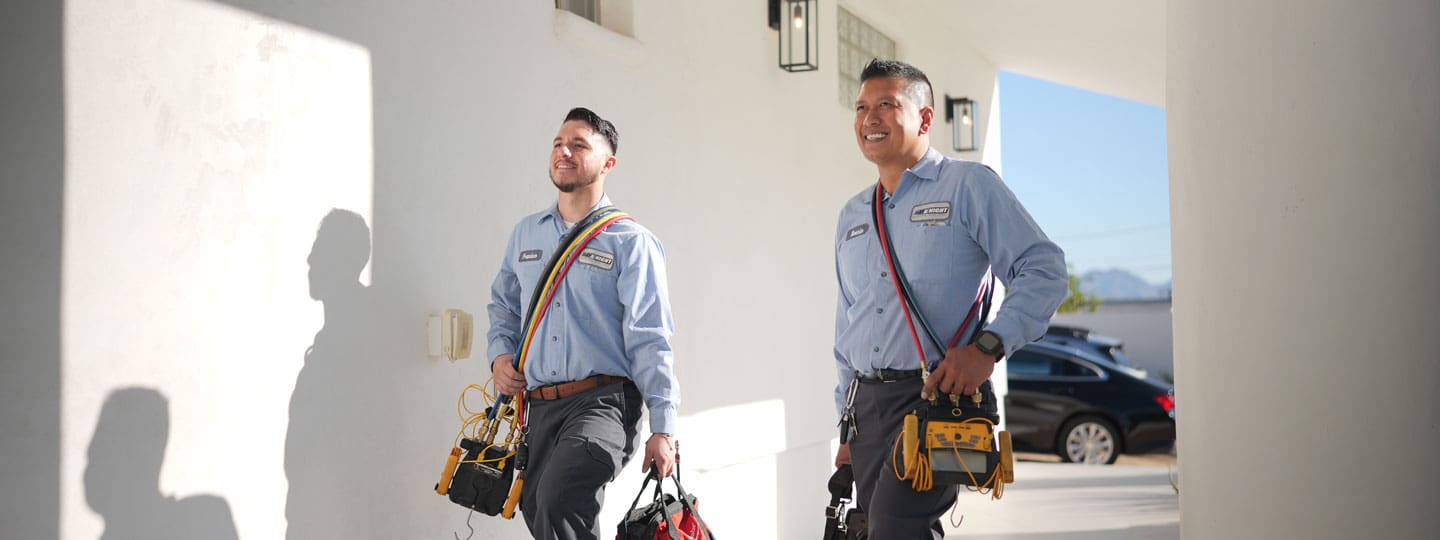
From there, the technician moves to leak confirmation. Methods escalate from simple to definitive. Soap bubble testing works on accessible joints and service valves. Electronic leak detectors sniff along the evaporator coil, TXV fittings, braze points at the condenser, and around Schrader cores. UV dye, when used, can pinpoint slow leaks in a ducted air handler above a ceiling in Sunnyslope or a rooftop unit in Maryvale. For stubborn cases, a nitrogen pressure test with trace refrigerant verifies drop rates and exposes micro-leaks that only show under pressure.
A responsible contractor follows EPA Section 608 rules. Venting is illegal. Recovery equipment captures the charge before repair. After repair, the system is evacuated to industry standards to remove air and moisture. Then the technician charges to manufacturer specs, confirmed by subcooling and superheat readings under Phoenix design load. This is the discipline that keeps heat pumps, split systems, and package units reliable once the summer settles in.
Where leaks hide in Phoenix systems
Leak locations mirror the stress points of a desert install. Rooftop units, common on Phoenix homes and small businesses, flex with thermal cycling. Braze joints at the condenser coil can fatigue. Vibration can crack aluminum-copper transitions. Indoor air handlers installed in hot garages in Ahwatukee Foothills face high ambient temperatures that accelerate wear on seals. In older split systems, the evaporator coil can develop formicary corrosion that looks like brown pinholes under a flashlight. Copper refrigerant lines that rub against framing members create a clean arc-shaped groove and a pinhole leak over time.
Service valve cores leak as they age. A simple cap with a good gasket can mask a slow valve leak for a while, but the charge drifts. TXV fittings and flare connections can seep if torque settings were off at install. On ductless mini-splits, installers sometimes leave a hairline flare crack that survives spring but fails under July pressures in Desert Ridge or South Mountain. All of these are routine finds for Phoenix-area NATE-certified technicians who work daily on heat pumps, central air conditioners, ductless systems, and rooftop package units.
Why refrigerant type and charge method matter
Most residential systems in Phoenix run R-410A today. The charge amount is specific to line set length, coil design, and the condenser model. A fixed-charge top-off without measurements risks undercharge or overcharge. Too little refrigerant yields low suction pressure, high superheat, and poor capacity. Too much refrigerant floods the condenser, raises subcooling beyond spec, and can cause slugging or compressor overheating. The correct method uses manufacturer data, ambient conditions, and target subcooling for TXV systems or target superheat for fixed-orifice systems.
The charge must match how the home operates in a dry, hot climate. Phoenix homes see long runtime during late afternoons. A technician charging in shade at 8 a.m. Must understand how that system behaves at 4 p.m. On a 113°F day in Paradise Valley. That is where experience shows. Day & Night technicians charge under load, confirm numbers at stabilized conditions, and double-check temperature split across the coil. That process protects the compressor and restores efficient cooling.
What a refrigerant leak does to other AC components
A low-charge system runs cold at the evaporator and hot at the compressor. Frost builds on the coil, then melts, and the drain line must carry the water. Phoenix dust can mix with algae and clog condensate drain lines. Safety float switches trip. The blower motor short cycles and can squeal. Start capacitors fail more often under high head pressure. Contactors arc. In worst cases, the compressor overheats and fails. That is a major repair that no one wants in July across 85018 or 85044.
A small leak rarely stays small. Copper erodes faster as oil and refrigerant leak out. The system loses lubrication. That is why a timely fix matters. Catching a TXV fitting leak in spring in North Mountain can prevent a midsummer compressor failure and hundreds of dollars in added energy cost.
How Day & Night handles leak diagnostics and repair
Technicians arrive with the right tools for Phoenix conditions. The service vehicle carries a calibrated electronic leak detector, micron gauge, recovery machine, nitrogen rig, and quality manifold or digital gauges. The team stocks heavy-duty start capacitors and universal contactors to secure first-visit restorations when failures cluster during heat spikes. If the blower motor amperage reads high or the contactor is welded shut, they correct those issues while addressing the low-charge condition. The goal is total central air conditioning restoration, not a patch.
For coils beyond practical repair, the team gives a clear range of options. That includes evaporator coil replacement, line set replacement if rub-through is confirmed, or a system replacement estimate when a compressor shows high hours and low efficiency. The crew services major brands Phoenix homeowners trust, including Trane, Carrier, Lennox, Goodman, Rheem, York, Bryant, and American Standard. For high-precision comfort in sunrooms and casitas in North Phoenix, many homeowners choose a Mitsubishi Electric ductless mini-split due to fine humidity control and zoning. Each recommendation reflects unit condition, load profile, and the home’s exposure.
Case snapshots across Phoenix neighborhoods
Arcadia, 85018. A two-story house with west-facing glass could not hold 78°F after noon. The suction line at the condenser showed frost. Pressures confirmed low R-410A with high superheat and low subcooling. Electronic leak detection found a slow seep at the service valve core. The technician replaced the core, pressure-tested with nitrogen, evacuated to 350 microns, and charged to target subcooling. Supply temperature delta returned to 19°F. The home stabilized at 76°F with normal run time during peak heat.
Desert Ridge, 85050. A rooftop package unit on a single-story experienced short cycling during late afternoon. The coil iced and thawed. Water stained ceiling tiles. UV dye revealed pinholes on the indoor coil from formicary corrosion. Due to age and coil cost, the owner chose a coil replacement and a drain line rework to support high humidity events during monsoon. The system has run clean through two peaks since.
Ahwatukee Foothills, 85048. A split system heat pump blew warm air. The outdoor fan ran, but the compressor did not engage. Testing showed a failed start capacitor. The tech replaced the capacitor from truck stock, then ran diagnostics and found subcooling low for the model. A minor leak at a TXV flare was the culprit. After torque correction, nitrogen test, and a proper charge, the system returned to normal with strong airflow and stable amperage.
Maryvale, 85031 nearby. A small business with a rooftop unit near Camelback Road reported high energy bills and complaints of warm air by mid-afternoon. The condenser coil was packed with desert dust, and subcooling was erratic due to a slow leak at a braze joint. The crew repaired the joint, deep-cleaned the condenser, and verified charge. The unit’s compressor amperage dropped, and cooling recovered even on 112°F afternoons.
What homeowners can do to prevent refrigerant leaks
No maintenance can stop metal fatigue forever, but regular HVAC maintenance reduces the odds of a surprise. Clean filters protect airflow across the evaporator coil. Annual coil cleaning keeps the condenser efficient and reduces compressor strain. During spring tune-ups in Phoenix, a NATE-certified technician inspects line set insulation, tightens electrical connections, checks contactors, and tests start and run capacitors. Measured superheat and subcooling during a maintenance visit provide a baseline. If those values drift, it prompts a closer look before peak load hits in July.
Homeowners in Paradise Valley Village and Biltmore should clear vegetation around condensing units, maintain a two-foot radius, and keep rooftop units free of debris. Inside, confirm that condensate drain lines are clear. High-efficiency filters are fine if changed on time. Oversized filters that choke airflow do more harm than good in Phoenix dust. Good airflow protects coils from freeze-ups that hide low-charge symptoms.
Why accurate leak repair matters for code, warranty, and safety
Arizona homeowners deserve work that stands up under heat and time. Federal law prohibits venting refrigerant. EPA Section 608 requires recovery and proper handling. On warranty systems from Trane, Carrier, Lennox, Goodman, Rheem, York, Bryant, Daikin, and American Standard, factory-authorized service helps protect coverage. Proper brazing with nitrogen purge prevents oxide formation inside lines. A measured evacuation with a micron gauge confirms a dry, tight system. A correct charge using manufacturer targets restores performance and protects the compressor. This is professional HVAC maintenance and repair at a standard that fits Phoenix demands.
Signal checks a Phoenix technician uses to differentiate a leak from airflow or electrical faults
Several issues can mimic low refrigerant. A blocked return or supply register can drop coil temperature and produce ice. Undersized or dirty filters can do the same. A weak blower motor can reduce airflow, which feels like low capacity. Electrical issues are common in high heat and can present as warm air. A failed contactor or start capacitor keeps the compressor off even while the fan runs, so air comes out warm.
A systematic diagnostic path prevents misdiagnosis. The technician first confirms compressor operation and compares pressures. If the compressor is not running and capacitors or contactors test bad, those are corrected first. Then the tech evaluates coil temperatures, superheat, and subcooling. If the system is clean and airflow is correct but superheat remains high and subcooling low, a leak search begins. This structure is vital for accurate AC repair Phoenix services and for delivering a first-visit fix.
Rooftop units and heat pumps in the Phoenix desert environment
Rooftop units, common near Midtown and Sunnyslope, see more vibration and thermal cycling. Hardware loosens. Brazed joints fatigue. Sun exposure degrades line set insulation and gaskets. Heat pumps work hard in both seasons, which exposes leaks sooner. A rooftop package unit that short cycles in July should get an immediate pressure check and a visual inspection of the condenser coil and braze joints. If a leak is present, a nitrogen pressure decay test can prove it fast, even in the afternoon heat.
Heat pumps in South Mountain and Ahwatukee often run through cool nights in winter. If the charge is low, defrost cycles stretch and efficiency drops. Homeowners sometimes notice higher winter electric bills that hint at a slow leak. Spring service is the best time to find and correct these issues before summer strain.
Ductless mini-splits and form-factor considerations
Ductless systems in Paradise Valley and Arcadia casitas use flare connections that require careful torque. Micro-leaks at these joints can hold for months, then fail under summer pressure. UV dye or an electronic sniffer works well on accessible line set covers. Because indoor coils are compact, a small leak can have a big impact. When leaks show in older ductless heads, homeowners often weigh repair versus replacement due to part availability and labor. For many rooms, upgrading to a Mitsubishi Electric ductless mini-split offers tighter temperature control and better humidity performance under Phoenix loads.
What the numbers look like on a healthy Phoenix AC
Every model has its targets, but a healthy central air conditioner will show a strong temperature split across the evaporator coil, often in the high teens under load, with stable superheat and subcooling that match the manufacturer chart for ambient conditions. The blower motor draws steady amperage. The compressor amperage stays in line with nameplate values. The condenser coil runs hot to the touch but not scalding. The supply vents feel cool and dry, even across rooms that face Camelback Mountain in late afternoon. If any of these markers drift, the system merits a closer look.
Safety, environment, and homeowner responsibility
Refrigerant exposure in small amounts during service is rare for homeowners when handled by professionals. Still, homeowners should avoid tampering with service valves or attempting to top off refrigerant. Unlicensed work risks injury, property damage, and legal penalties. Refrigerant management protects the environment and keeps Phoenix air quality clean. Hire licensed, bonded, and insured professionals who follow recovery and leak repair standards. Day & Night operates under ROC #133378, which reflects licensing compliance for Arizona HVAC service.
How location affects response and parts availability
Day & Night positions its fleet to reach homes fast from Arcadia to Desert Ridge, from Maryvale to Ahwatukee Foothills. Same-day service is the goal for urgent calls in 85032, 85050, 85018, 85044, 85048, 85016, 85021, and 85085. During heatwaves, start capacitors and contactors fail across the city. The trucks carry heavy-duty start capacitors and universal contactors to restore compressor operation without delay. For brand-specific parts on Trane, Carrier, Lennox, Goodman, Rheem, York, Bryant, and American Standard, the shop maintains local supplier relationships near major corridors. That network shortens downtime and keeps warranties intact.
Costs, trade-offs, and what drives the right decision
Leak repair ranges widely. A valve core replacement with a recharge costs far less than an evaporator coil change. A coil with formicary corrosion may leak again even after spot repairs. In that case, a coil replacement or a system upgrade is smarter. Compressors with high run hours and low efficiency make a strong case for replacement. Day & Night technicians explain the math, including energy savings under Phoenix cooling loads, potential rebates, and brand options. For many homeowners in 85018 or 85044, a high-efficiency heat pump or a variable-speed split system delivers quieter operation, lower bills, and a longer service life under desert conditions.
A simple Phoenix-focused action plan for suspected leaks
Homeowners who suspect a leak can follow a short plan to protect the system and comfort without wasting time or money.
- Switch the thermostat to fan-only if the evaporator coil is iced. Let it thaw for an hour.
- Replace or check the filter. Restore proper airflow.
- Look for frost on lines and listen for the compressor at the outdoor unit.
- If cooling is weak or short cycling continues, request AC repair Phoenix with a NATE-certified contractor.
- During service, ask for documented superheat and subcooling values with the final charge confirmation.
Residential and commercial systems covered across Maricopa County
Day & Night services central air conditioners, heat pumps, ductless mini-splits, package units, and rooftop units across Phoenix, Scottsdale, Tempe, Mesa, Chandler, Glendale, Peoria, Gilbert, and Paradise Valley. The team restores airflow, replaces failed fan motors, evaluates expansion valves, and verifies control boards and relay switches. Commercial property managers near Chase Field and the Heard Museum rely on fast response to protect tenants and inventory. Homeowners in quiet cul-de-sacs near Papago Park trust friendly, clear guidance that fixes the problem and explains the cause.
For homeowners searching emergency air conditioning repair near me during a spike in temps, proximity and technician readiness matter. Valley traffic and heat are real. Local knowledge helps. A tech that knows the quickest way to a rooftop unit near the Arizona State Capitol or a backyard condenser in Sunnyslope makes the difference on a 115°F day.
Why Phoenix chooses NATE-certified, BBB A+ rated service
NATE certification signals a technician has passed skill-based testing that covers compressors, refrigerant circuits, airflow, and electrical systems. A BBB A+ rating reflects consistent service quality. Licensing under ROC #133378 confirms legal compliance and bonding for homeowner protection. These trust markers matter under desert stress, where mistakes are costly and living without cooling is not an option. Fixed-price guarantees and same-day service help homeowners plan, even during peak calls. Uniformed, professional experts deliver clear communication and reliable outcomes.
Map Pack signals Phoenix homeowners send when they choose local AC repair
Local rankings reflect service proximity, relevance, and reputation. Requests for AC repair Phoenix that include neighborhoods like Arcadia, Biltmore, and Desert Ridge help Google associate the contractor with those geographies. Consistent mentions of landmarks such as Camelback Mountain, Footprint Center, and Phoenix Sky Harbor reinforce local relevance. When homeowners leave reviews that mention specific symptoms like frozen evaporator coils, clogged condensate drain lines, or short cycling, it strengthens the contractor’s topical authority. Day & Night’s work across the 85018, 85016, 85032, 85050, 85048, 85044, 85021, and 85085 zip codes forms a service footprint that aligns with real dispatch patterns.
Frequently asked Phoenix questions about refrigerant leaks
Can a system just need a top-off each year? No. Refrigerant is not a fuel. A loss means a leak. Topping off without repair wastes money and strains the compressor.
Why does the coil freeze even in dry heat? Low refrigerant lowers evaporator pressure and temperature below freezing. Moisture in the return air freezes on the coil even when the outdoor air is dry.
Is UV dye safe? When used properly, yes. It is a diagnostic aid, not a fix. The leak still needs repair.
How long does a proper repair take? Simple valve core repairs with recharge can be completed the same visit. Coil replacements vary by access and brand parts, often same or next day depending on supply.
Will a repair affect my SEER rating? Using OEM parts and charging to specification preserves efficiency and warranty conditions. Cutting corners reduces performance and can void coverage.
Clear signals that it is time to call Day & Night
If the AC blows warm air during peak heat in Arcadia or Ahwatukee, if the copper lines show ice, if the thermostat never reaches the setpoint in Desert Ridge, or if energy bills spike without improved comfort, it is time to schedule service. Refrigerant leaks can be small. The damage they cause is not. Prompt diagnosis prevents compressor failure and water damage and restores steady cooling under Phoenix heat.
Service availability across Phoenix and neighboring cities
Day & Night provides 24/7 emergency AC repair for homes and businesses in Phoenix and nearby Scottsdale, Tempe, Mesa, Chandler, Glendale, Peoria, Gilbert, and Paradise Valley. From properties near Chase Field and the Arizona State Capitol to homes tucked under Camelback Mountain, the team dispatches quickly and carries the parts and tools to finish the job. The service area covers key Phoenix zip codes including 85018, 85016, 85032, 85050, 85048, 85044, 85021, and 85085.
Day & Night Air Conditioning, Heating & Plumbing 3669 E La Salle St,
Phoenix, AZ 85040 (602) 584-7758 www.dayandnightair.com AZ Licenses: ROC335883 | ROC335884 Google Maps | Facebook | Instagram | LinkedIn